The Phenomenon of Totality
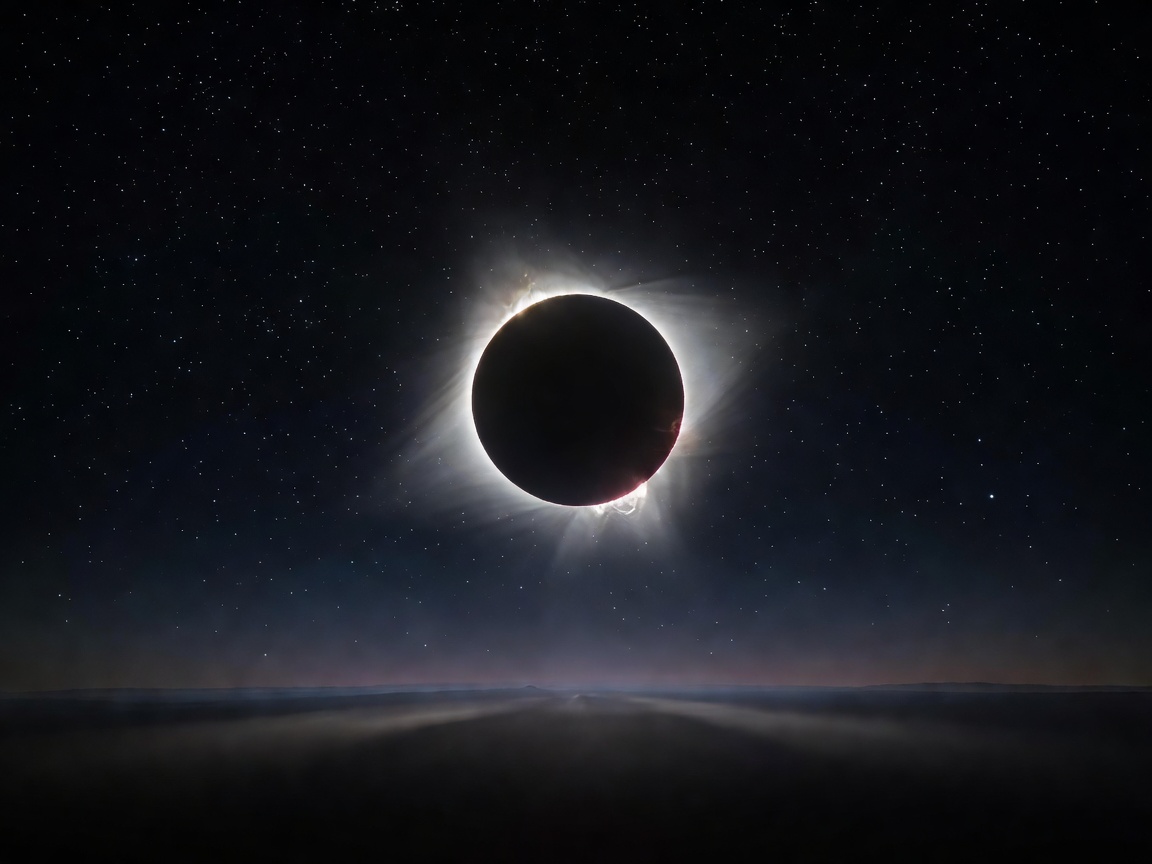
A total solar eclipse is widely considered the most awe-inspiring natural event visible from Earth. It occurs when the moon passes directly between the Earth and the Sun, completely blocking the solar disk and casting a shadow onto the planet's surface. The track of this shadow is known as the Path of Totality. Outside of this narrow path, observers see only a partial eclipse; inside it, day turns to deep twilight, stars and planets become visible, and the sun's ghostly white corona arcs across the sky.
Understanding the Types of Eclipses
Not all eclipses are created equal. Depending on the orbital mechanics at the time of the event, different phenomena occur.
- Total Solar Eclipse: The moon completely covers the sun. This is the only time it is safe to look directly at the sun with the naked eye (solely during the few minutes of total coverage).
- Annular Solar Eclipse: Occurs when the moon is near its apogee (farthest point from Earth) and appears too small to completely cover the sun. This leaves a brilliant "ring of fire" visible. Specialized solar glasses must be worn at all times during an annular eclipse.
- Lunar Eclipse: The Earth passes between the sun and a full moon, casting its shadow on the lunar surface. A total lunar eclipse turns the moon a deep blood red. These are visible from the entire nighttime half of the planet and require no protective eyewear.
The Logistics of Chasing
Umbraphiles—people who chase eclipses—often plan their travel years, if not decades, in advance. The Path of Totality for any given solar eclipse is incredibly narrow, typically only 50 to 100 miles wide. Accommodations within this path book up entirely, often at exorbitant premium rates. Successfully chasing an eclipse involves meticulous logistical planning.
Weather is the single greatest variable in eclipse chasing. A heavily overcast sky will plunge the landscape into darkness, but it will obscure the corona entirely. Seasoned chasers study historical cloud cover data for the specific region and month of the eclipse. They often build mobility into their plans, renting cars or booking spots on mobile expeditions, allowing them to rapidly relocate hundreds of miles on the morning of the event to seek out gaps in the clouds.
Safety First: Solar Viewing Protocols
| Phase of Eclipse | Protective Eyewear Required? | Details |
|---|---|---|
| Partial Phases (Pre-Totality) | YES | ISO 12312-2 certified solar glasses must be worn. Even 1% of the sun's surface can cause permanent retinal damage. |
| Baily's Beads / Diamond Ring | YES | The last flashes of sunlight shining through lunar valleys. Glasses must remain on. |
| Totality | NO | Once the sun is 100% covered, glasses must be removed to see the faint corona. Staring with glasses will yield pitch blackness. |
| Partial Phases (Post-Totality) | YES | The moment the sun begins to emerge (third contact), solar glasses must go immediately back on. |
The Subjective Experience
Those who have witnessed totality often describe a profound, primal emotional response. As the moon's shadow races across the landscape at supersonic speeds, the temperature suddenly drops. Local wildlife reacts erratically; birds return to roost, and crickets begin to chirp. The 360-degree sunset colors the horizon, and the sky directly overhead takes on a deep, bruised purple hue. The sheer mechanical scale of the solar system becomes momentarily, viscerally apparent.
Eclipse chasing is not just about astronomy; it is a global subculture. Observers gather in remote fields, city parks, and aboard cruise ships, united by a shared, fleeting moment of cosmic alignment. Whether you are traveling fifty miles or halfway across the globe, standing in the shadow of the moon is an experience that redefines perspective.